Napoleon's Tomb & Dome des Invalides: Complete Visitor Guide
Visit Napoleon's Tomb in Paris. A complete guide to the Dôme des Invalides, tickets, history, and the other famous military leaders buried there.
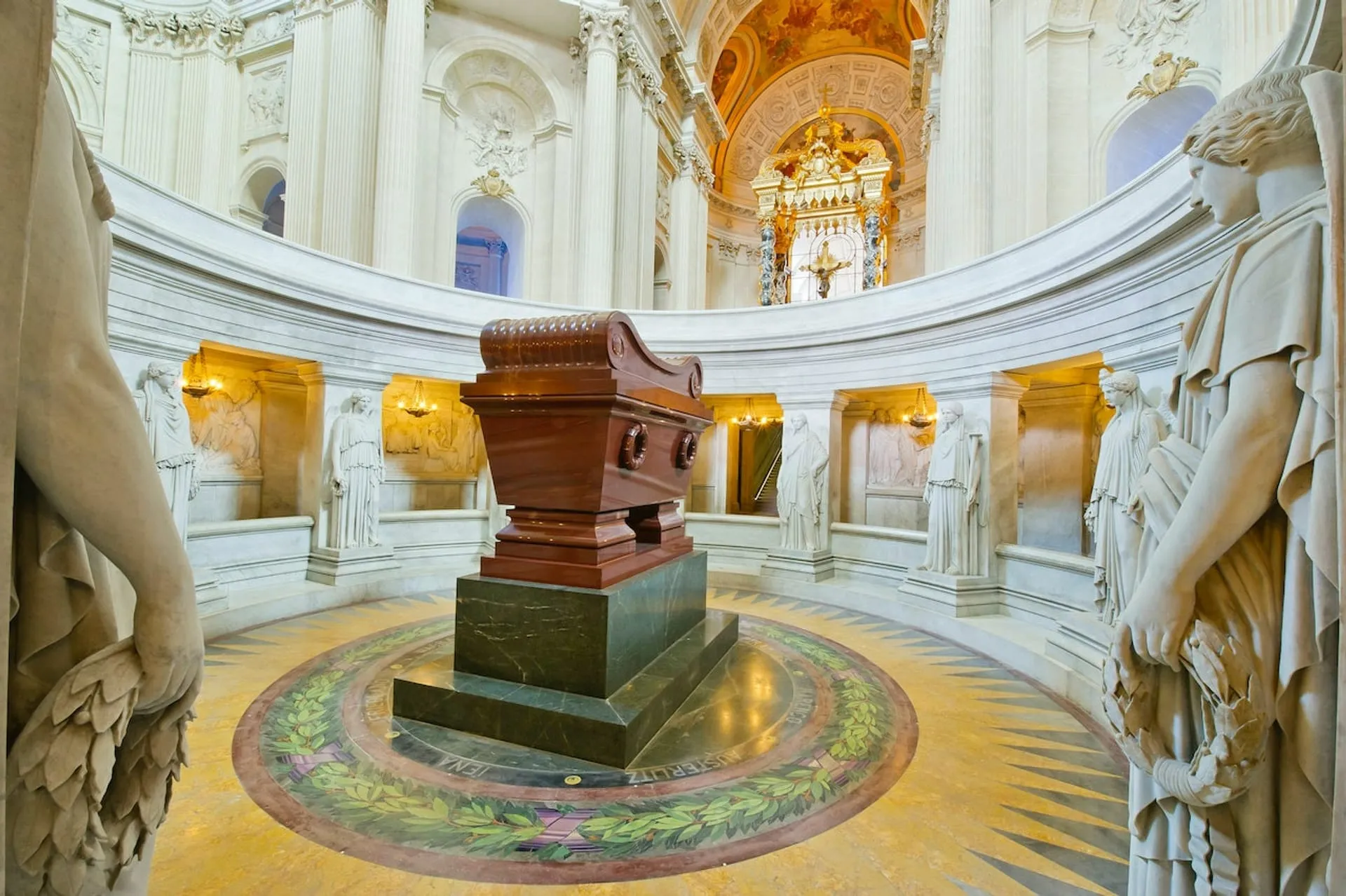
The Dôme des Invalides is one of the most recognizable landmarks in the Paris skyline, its golden roof shining above the 7th arrondissement. But its true grandeur lies inside: it is the final resting place of Napoleon Bonaparte, France’s most famous emperor, and a masterpiece of Baroque architecture that demands attention.
The Emperor’s Resting Place: A History
Napoleon died in exile on the island of St. Helena in 1821, far from the France he had reshaped. It wasn't until 1840 that King Louis-Philippe, seeking to bolster his own popularity by tapping into Napoleonic nostalgia, decided to bring his remains back to France in an event known as the Retour des Cendres (Return of the Ashes).
"I wish my ashes to rest on the banks of the Seine, in the midst of that French people which I have loved so much." — Napoleon's Last Will
The transfer was a massive state event. His body was laid to rest in the Dôme church, which was significantly remodeled to accommodate the tomb. The architect Visconti designed a circular open crypt beneath the dome, creating a dramatic viewing gallery so visitors could look down at the sarcophagus without disturbing the peace of the dead.
What to Look For
The tomb itself is a study in power and simplicity.
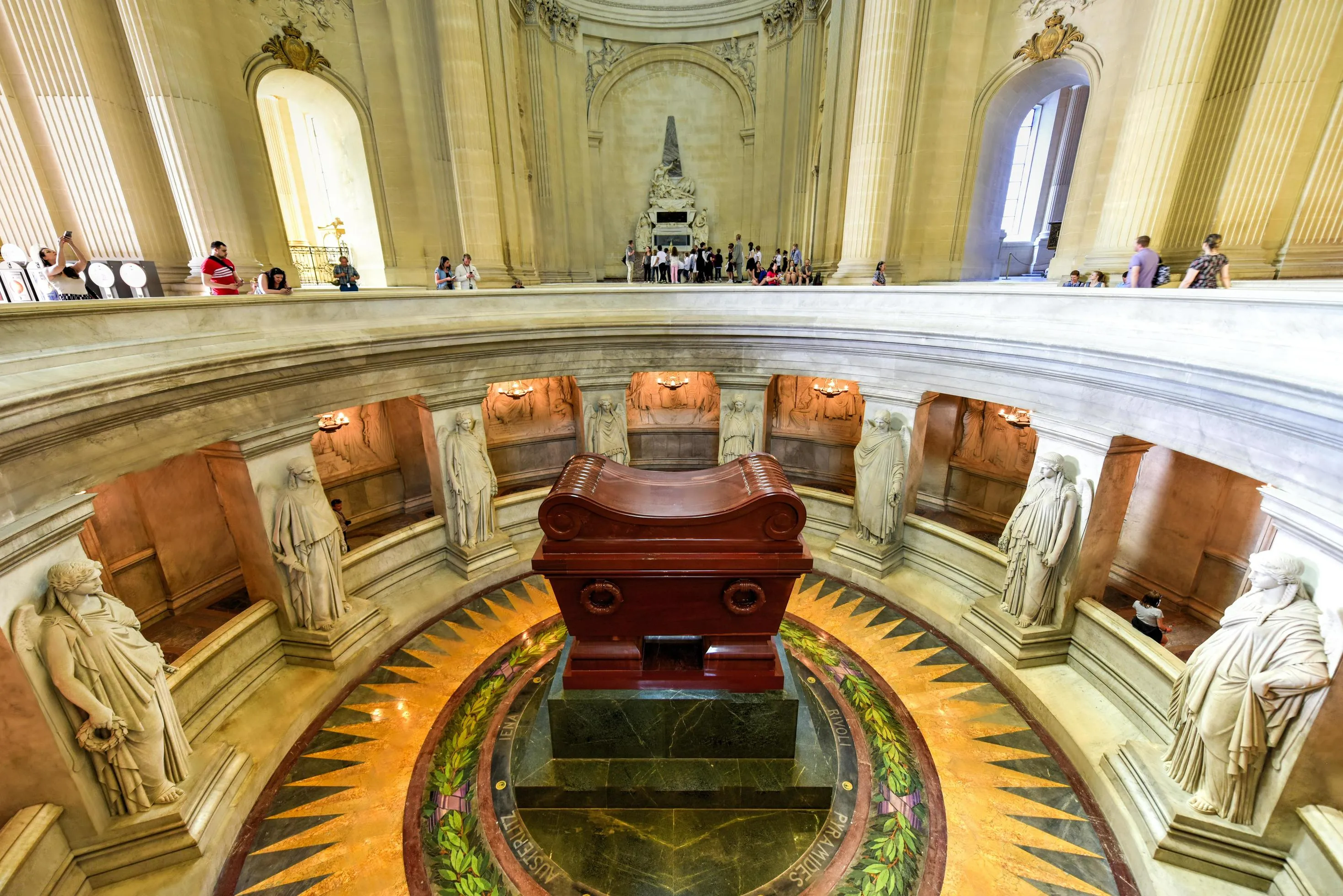
- The Sarcophagus: Sculpted from red quartzite (often mistaken for porphyry), it is imposing yet simple, devoid of heavy ornamentation but radiating power. It rests on a green granite base from the Vosges.
- The 12 Victories: Surrounding the tomb are 12 larger-than-life sculptures representing Napoleon's military victories. Sculpted by Pradier, they stand guard, facing the tomb, symbolizing the eternal watch over the Emperor.
- The Mosaic Floor: Look closely at the floor around the sarcophagus; it lists the sites of his greatest battles, including Rivoli, Pyramids, Marengo, Austerlitz, Jena, Friedland, Wagram, and Moscow. The laurel wreaths around the names symbolize victory.
- The Statue of Napoleon: In the back of the crypt stands a statue of Napoleon in his coronation robes, adding a touch of imperial majesty.
Who Else is Buried Here?
While Napoleon takes center stage, the Dome is a true military pantheon, honoring France's greatest military minds. You will also find the tombs of:
- Joseph and Jérôme Bonaparte: Napoleon’s brothers, whose presence reinforces the dynastic nature of the monument.
- The King of Rome (Napoleon II): His son, the "Eaglet," whose remains were transferred here by Hitler in 1940 as a calculated "gesture of goodwill" towards the French people during the Occupation.
- Marshals Foch and Lyautey: Two of the most distinguished French military commanders from the 20th century. Foch was the Supreme Allied Commander in WWI, and Lyautey was a key figure in French colonial history.
- Vauban: The famous military engineer of Louis XIV. His heart is preserved here in a black marble cenotaph. Vauban revolutionized fortification design, and his star-shaped forts can still be seen all over France.
- Turenne: One of France's greatest marshals under Louis XIV, showing the continuity of French military excellence.
Architecture of the Dome
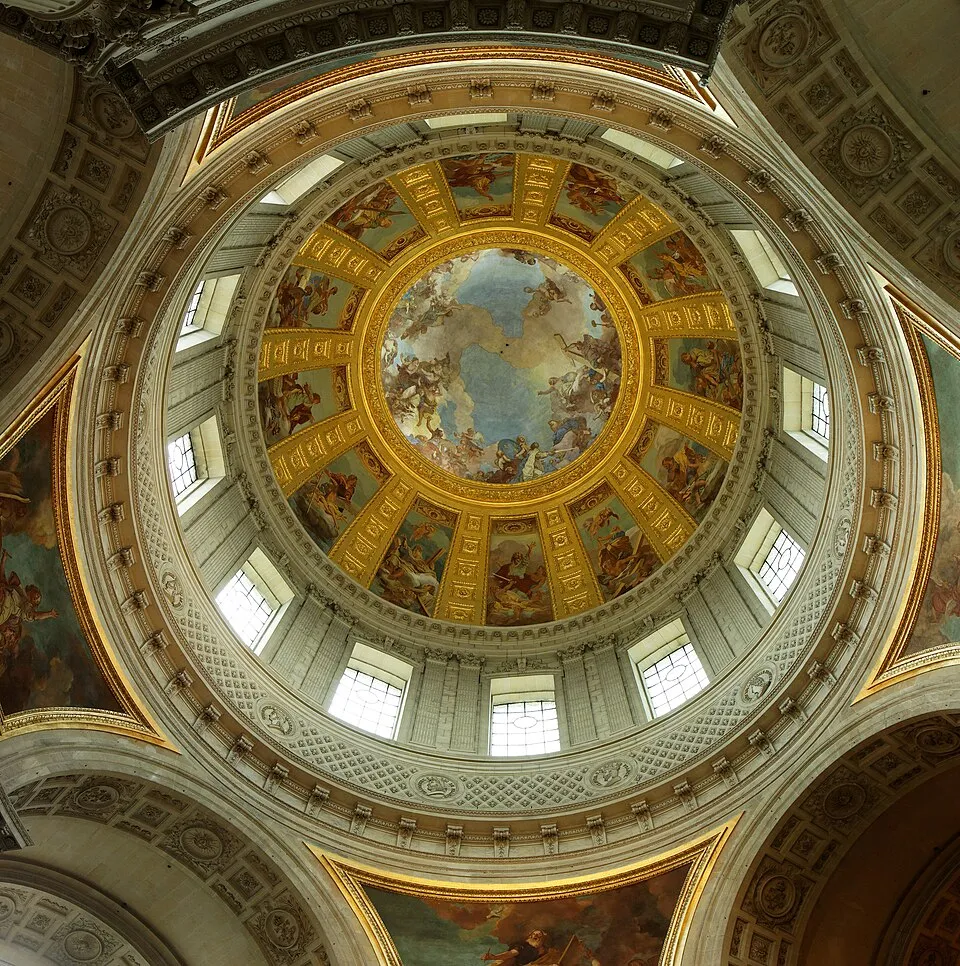
Designed by Jules Hardouin-Mansart, the Dome was originally the royal chapel for Louis XIV. It is arguably the finest example of French Baroque architecture in existence.
- Height: At 107 meters high, it was the tallest building in Paris for a long time.
- The Ceiling: The interior of the dome features a stunning fresco painted by Charles de La Fosse, depicting Saint Louis handing his sword to Christ. The perspective is designed to draw the eye upward to the heavens.
- The Gold: The roof was re-gilded in 1989 for the bicentennial of the French Revolution, using 12 kilos of gold leaf. Regular maintenance ensures it continues to shine as a beacon over Paris.
- The Lantern: The very top of the dome features a lantern structure that adds elegance to the silhouette.
Visitor Tips
- Ticket Validity: The ticket to the Musée de l'Armée includes access to the Dome. You cannot buy a separate ticket just for the tomb, so plan to see at least a bit of the museum as well.
- Best Time to Visit: Late afternoon (after 4 PM) is often quieter, allowing for a more contemplative experience. The light coming through the windows changes throughout the day, altering the mood of the crypt.
- Photography: Exploring the circular gallery looking down at the tomb offers excellent angles for photos without obstructions. The symmetry is perfect for wide-angle shots.
- Respect: While it is a tourist attraction, it is also a grave. A degree of quiet and respect is expected.
L'autore

Paris History Buff
Questa guida è scritta da appassionati di storia dedicati ad aiutarti a navigare nel massiccio complesso degli Invalides. Miriamo a chiarire la disposizione, i tipi di biglietti e le gemme nascoste spesso perse nella pura mole di reperti.
Tags
Comments (0)
Loading comments...